
COVID-19 Resources
Patient Resources
COVID-19 in St. Tammany Parish
Three years and 100 days after COVID-19 was declared a U.S. public health emergency, the federal government allowed that emergency declaration to expire on May 11, 2023, but that doesn’t mean the coronavirus that upended everything in early 2020 is going away.
It’s still here. New cases are still cropping up daily. But between vaccines and acquired immunity, it isn’t spreading nearly as fast as it was in the beginning of the pandemic. Additionally, the healthcare industry has greatly improved its capacity to fight COVID-19, so those who do catch it fare better than those early in the pandemic.
Long story short, COVID-19 will be treated like any other respiratory ailment going forward. Given that, we at St. Tammany Health System have decided to discontinue the daily COVID counts that we published at this page throughout the pandemic.
We will continue, however, to keep it updated with the latest information as needed. Thank you, as always, for choosing St. Tammany Health System to care for you and your family.
COVID-19 Vaccines
Details on who is eligible and how they can get vaccinated.
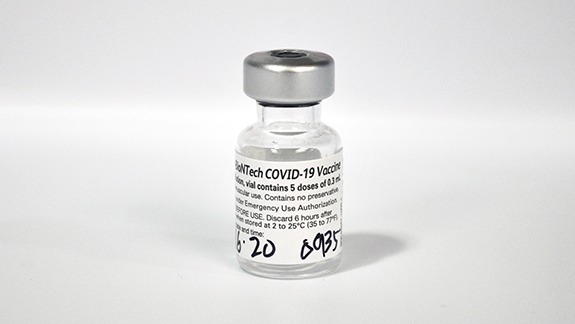
St. Tammany Health System is currently administering COVID-19 vaccines and boosters in patients 5 and older by appointment.
Appointments should be made via the free MyChart app. Those experiencing difficulty with the app can make an appointment by calling (985) 898-4001 (select option 1), which is answered 24/7, although anticipated heavy call volumes may result in a longer-than-usual wait during peak hours.
Effective Oct. 29, 2021, the Centers for Disease Control and Prevention approved use of Pfizer-BioNTech's two-dose COVID-19 vaccine in children 5 and older. Prior to that, it was approved only for use in patients 12 and older.
Vaccines produced by Moderna and by Johnson & Johnson are both recommended only for patients 18 and older.
When making your appointment, please note which vaccine you will be receiving. Both the Pfizer-BioNTech vaccine and the Moderna vaccine are two-dose vaccines and will require a follow-up appointment to receive the second dose. The Johnson & Johnson vaccine is a one-dose vaccine that requires no follow-up.
This web page will be updated to reflect any changes to vaccine availability or eligibility.
COVID-19 Testing
It’s still here. New cases are still cropping up daily.
We recommend you keep at-home COVID-19 tests on-hand so you and your family can test yourselves quickly if you suspect you might have contracted COVID-19.
In the event of a positive test, we urge you to consult a physician for further treatment if symptoms worsen. To reduce the chance of transmission to others, please do not enter a doctor's office if you think you have COVID. Rather, call the office and ask for further guidance.
COVID-19: Cautionary Tales
St. Tammany Parish COVID-19 survivors share details of their coronavirus ordeals -- along with a timely warning.
COVID-19 Mythbusting
Debunking some commonly repeated COVID-19 vaccine myths
Note: The following information was provided by the Mayo Clinic.
Facts: Many pharmaceutical companies invested significant resources into quickly developing a vaccine for COVID-19 because of the worldwide impact of the pandemic.
While there are many COVID-19 vaccine candidates in development, the Pfizer-BioNTech vaccine was the first authorized for emergency use by the FDA in December. This vaccine was created using a novel technology based on the molecular structure of the virus. The novel methodology to develop a COVID-19 vaccine allows it to be free from materials of animal origin and synthesized by an efficient, cell-free process without preservatives. This vaccine developed by Pfizer-BioNTech has been studied in approximately 43, 000 people.
The emergency situation warranted an emergency response but that does not mean that companies bypassed safety protocols or didn't perform adequate testing. To receive emergency use authorization, the biopharmaceutical manufacturer must have followed at least half of the study participants for at least two months after completing the vaccination series, and the vaccine must be proven safe and effective in that population.
In addition to the safety review by the FDA, the Advisory Committee on Immunization has convened a panel of vaccine safety experts to independently evaluate the safety data from the clinical trial. Mayo Clinic vaccine experts also will review the available data. The safety of COVID-19 vaccine will continue to be closely monitored by the Centers for Disease Control and Prevention (CDC) and the FDA.
Facts: There is not enough information currently available to say if or for how long after infection someone is protected from getting COVID-19 again. This is called natural immunity. Early evidence suggests natural immunity from COVID-19 may not last very long, but more studies are needed to better understand this. Mayo Clinic recommends getting the COVID-19 vaccine, even if you’ve had COVID-19 previously. However, those that had COVID-19 should delay vaccination until about 90 days from diagnosis. People should not get vaccinated if in quarantine after exposure or if they have COVID-19 symptoms.
Facts: There are short-term mild or moderate vaccine reactions that resolve without complication or injury. The early phase studies of the Pfizer vaccine show that it is safe. About 15% of people developed short-lived symptoms at the site of the injection. Also, 50% developed systemic reactions, primarily headache, chills, fatigue or muscle pain or fever lasting for a day or two. These side effects are indicators that your immune system is responding to the vaccine and are common when receiving vaccines.
Facts: It may take time for everyone who wants a COVID-19 vaccination to get one. Also, while the vaccine may prevent you from getting sick, it is unknown at this time if you can still carry and transmit the virus to others. Until more is understood about how well the vaccine works, continuing with precautions, such as wearing a mask and practicing physical distancing, will be important.
Facts: Circulating on social media is the claim that COVID-19's mortality rate is 1% to 2% and that people should not be vaccinated against a virus with a high survival rate. However, a 1% mortality rate is 10 times more lethal than the seasonal flu. In addition, the mortality rate can vary widely and is influenced by age, sex and underlying health condition.
While some people that receive the vaccine may develop symptoms as their immune system responds, remember that this is common when receiving any vaccine and not considered serious or life-threatening. You cannot get COVID-19 infection from the COVID-19 vaccines; they are inactivated vaccines and not live viruses.
It's important to recognize that getting the vaccine is not just about survival from COVID-19. It's about preventing spread of the virus to others and preventing infection that can lead to long-term negative health effects. While no vaccine is 100% effective, they are far better than not getting a vaccine. The benefits certainly outweigh the risks in healthy people.
Facts: There is no vaccine microchip, and the vaccine will not track people or gather personal information into a database.
This myth started after comments made by Bill Gates from The Gates Foundation about a digital certificate of vaccine records. The technology he was referencing is not a microchip, has not been implemented in any manner and is not tied to the development, testing or distribution of any COVID-19 vaccines.
Facts: Pfizer-BioNTech and Moderna’s vaccines, which are the first COVID-19 vaccines to reach the market, are messenger RNA (mRNA) vaccines. According to the CDC, mRNA vaccines work by instructing cells in the body how to make a protein that triggers an immune response. Injecting mRNA into your body will not interact or do anything to the DNA of your cells. Human cells break down and get rid of the mRNA soon after they have finished using the instructions.
Facts: Current mRNA COVID-19 vaccines do not require the use of fetal cell cultures in the production process.
Facts: No, COVID-19 vaccines have not been linked to infertility or miscarriage.
A sophisticated disinformation campaign has been circulating online, claiming that antibodies to the spike protein of COVID-19 produced from these vaccines will bind to placental proteins and prevent pregnancy. This disinformation is thought to originate from internet postings by a former scientist known to hold anti-vaccine views.
These postings are not scientifically plausible, as COVID-19 infection has not been linked to infertility. Also, no other viral infection or vaccination-inducing immunity by similar mechanisms has been shown to cause infertility. Antibodies to the spike protein have not been linked to infertility after COVID-19 infection. There is no scientific reason to believe this will change after vaccination for COVID-19.
While there are no formal studies, the best evidence comes from women who got sick with COVID-19 while pregnant. While data clearly indicate pregnant women are at higher risk of hospitalization due to COVID-19 infection, there is no evidence of increased miscarriage rates.
During natural infection, the immune system generates the same antibodies to the spike protein that COVID-19 vaccines would. Thus, if COVID-19 affected fertility, there already would be an increase in miscarriage rates in women infected with COVID-19. This has not happened.
Facts: Neither the Pfizer-BioNTech vaccine nor the Moderna vaccine contain egg.
Further COVID-19 Resources
We work closely with the Louisiana Department of Health (LDH) and Centers for Disease Control (CDC) to make sure that we are informed. We manage our facilities to ensure we are supplied and prepared for our community’s needs. For information, call the Office of Public Health COVID-19 Information Line, 855-523-2652, Monday-Friday, 8 a.m. to 4:30 p.m.
To join our neighbor email list to receive regular updates about the COVID situation at St. Tammany Health System, email commdept@stph.org with COVID Update for Neighbors in the subject line.
For COVID-19 updates, visit the following sites:
- St. Tammany Heath System: www.StTammany.health/COVID19
- Ochsner Health System: www.ochsner.org/coronavirus
- Centers for Disease Control (CDC): www.coronavirus.gov
- Louisiana Department of Health (LDH): www.ldh.la.gov/Coronavirus
- St. Tammany Parish Government: www.stpgov.org/COVID19
- St. Tammany Parish Public Schools: www.stpsb.org/coronavirus
- Find the most recently reported statistics from the Louisiana Department of Health, which is updated daily at noon, at www.LDH.la.gov/Coronavirus.
Just the Facts
A series of informational fact sheets on what we know about COVID-19. Click the links below to launch downloadable, printer-friendly fact sheets.
- The facts on the Omicron variant
- The risks of remaining unvaccinated
- The truth about breakthrough cases of COVID
- Why the delta variant is no joke
- Long COVID: Facts on lingering side effects
- Mask wearing 101
- Keeping kids safe from COVID while in school
- Natural immunity vs. COVID-19 vaccines
- Vaccination of teens and young adults
- Effects of COVID vaccines
- COVID vaccines, fertility and childbirth